Shifts in Global Manufacturing Practices for Professional Gaming Tables and Their Distribution Networks
Noah Vogel · Sep 7, 2026
Shifts in Global Manufacturing Practices for Professional Gaming Tables and Their Distribution Networks
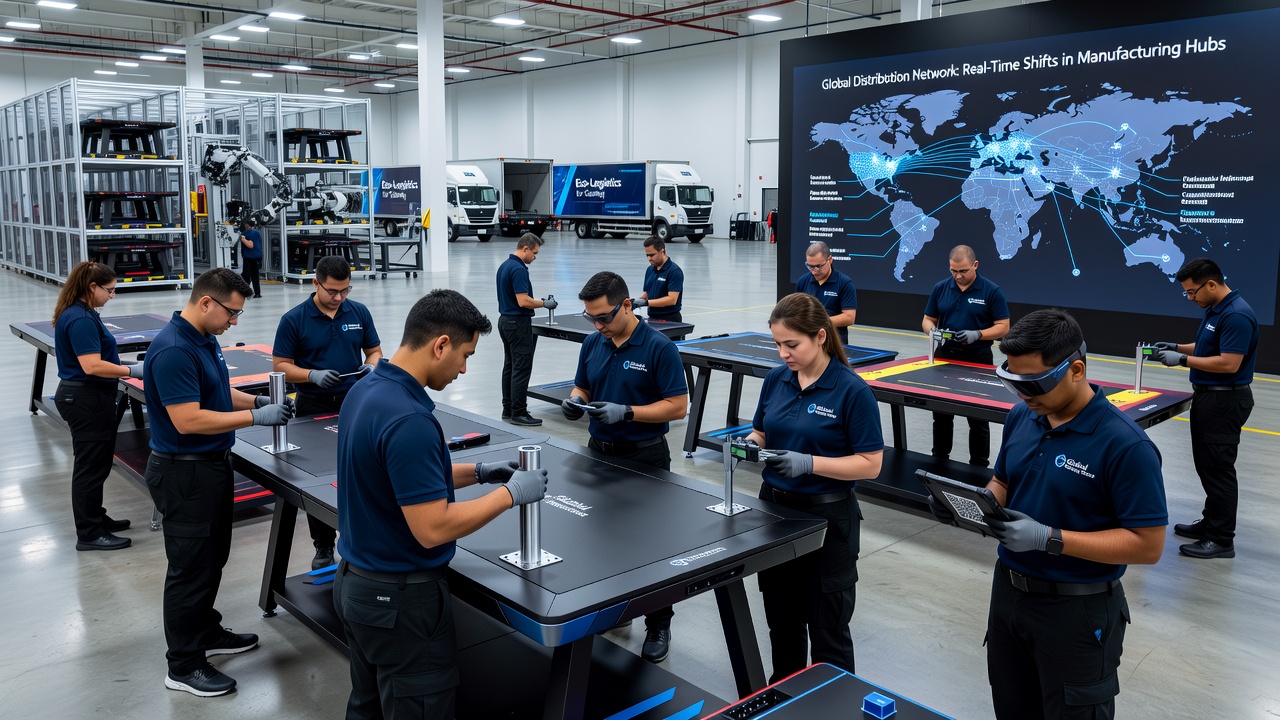
Manufacturing facilities that produce professional gaming tables have undergone measurable changes in material sourcing and assembly techniques over the past five years, driven by adjustments in labor costs alongside advances in modular construction methods. Companies in Southeast Asia and Eastern Europe now handle larger shares of production for felt-covered poker tables and roulette wheels that meet casino specifications, while facilities in North America focus on final customization and quality verification steps.
Material and Process Adjustments in Table Production
Traditional hardwoods have given way in many lines to composite panels and reinforced polymers that reduce overall weight without sacrificing stability under repeated use, according to trade data compiled by the International Trade Administration. Automated cutting systems apply precise patterns for recessed chip trays and dealer stations, which shortens production cycles from several days to under 24 hours per unit in high-volume plants. Suppliers report that water-based adhesives and low-VOC coatings have replaced solvent-heavy finishes in response to updated environmental standards across multiple jurisdictions.
Robotic stitching equipment now handles the attachment of speed cloth and rail padding on blackjack layouts, creating uniform tension that manual methods once achieved only through extended training periods. These machines operate alongside human inspectors who verify alignment of built-in card shuffler mounts and LED lighting channels before tables receive final packaging.
Changes in Regional Production Hubs
Vietnam adn Mexico have expanded capacity for base frame fabrication since 2023, absorbing orders that previously routed through single-country supply lines. Government export records show Vietnamese facilities shipped over 12,000 complete gaming table frames in the first half of 2026, a volume that reflects new partnerships with European casino operators seeking shorter lead times. Meanwhile, established manufacturers in Italy continue to specialize in high-end custom inlays using laser-etched logos and embedded sensor arrays for table management systems.
September 2026 brought the release of updated tariff schedules from the U.S. International Trade Commission that affect imported table components, prompting several North American distributors to increase inventory buffers ahead of potential duty adjustments. Facilities in Canada have responded by qualifying additional domestic vendors for steel leg assemblies and hydraulic lift mechanisms used in height-adjustable dealer stations.
Distribution Network Reconfigurations
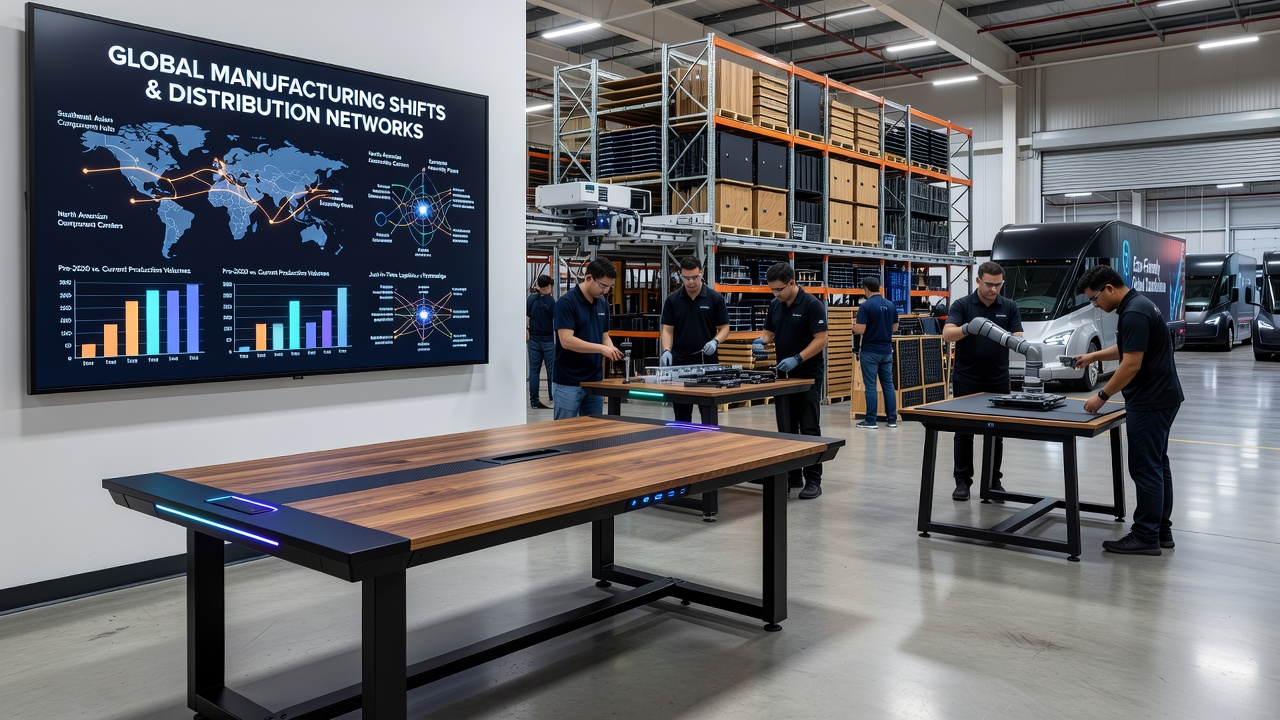
Distribution routes for finished tables now incorporate more regional consolidation points rather than direct factory-to-casino shipments. Logistics providers have added specialized climate-controlled containers that protect felt surfaces and electronic components during transit across temperature extremes common on transpacific routes. Data from the World Trade Organization indicates that multimodal transport combinations using rail segments in North America have reduced average delivery windows by 18 percent compared with all-ocean routing patterns observed in 2021.
Just-in-time delivery agreements have emerged between table fabricators and major resort groups in Macao and Singapore, where floor renovations require synchronized arrivals of multiple table configurations. These contracts often include provisions for rapid reconfiguration of base models into tournament-style units with extended rail padding and integrated camera mounts.
Technology Integration and Quality Standards
Digital twins of table designs allow engineers to simulate stress loads from player activity and dealer movements before physical prototypes reach the testing floor. Sensors embedded during assembly now transmit performance metrics back to manufacturers, enabling predictive maintenance recommendations that extend service life for high-traffic installations. Industry reports note that such feedback loops have reduced warranty claims related to rail wear by measurable margins in properties that adopted the systems early.
Third-party certification programs for gaming equipment have expanded to cover environmental and traceability criteria in addition to traditional durability and fairness benchmarks. Auditors verify that wood-based elements originate from certified sustainable forestry operations while composite materials meet recycling content thresholds established by casino regulatory bodies in Nevada and New Jersey.
Supply Chain Resilience Measures
Manufacturers have diversified fastener and hardware sourcing away from single-origin suppliers, maintaining approved vendor lists that span at least three geographic regions for critical items such as leveling feet and hinge assemblies. Buffer stocks of specialized felt rolls sit at intermediate warehouses in the Netherlands and Dubai to support quick replenishment for European and Middle Eastern clients when primary production lines experience disruptions.
Training programs for assembly technicians now emphasize cross-functional skills that allow workers to shift between frame construction and electronics integration as order mixes change seasonally. These programs draw on standardized curricula developed through partnerships between equipment producers and vocational institutes in Poland and Malaysia.
Conclusion
Global manufacturing of professional gaming tables continues to reflect coordinated shifts in material technology, regional capacity allocation, and logistics optimization. Distribution networks have adapted by incorporating additional consolidation nodes and sensor-enabled tracking that support more responsive delivery to casino operators across continents. These developments rest on documented trade flows, regulatory updates, and production statistics rather than isolated case examples.