Mapping Supply Chains for Custom Playing Cards in Private High-Stakes Gaming Salons
Drew Butler · May 24, 2026
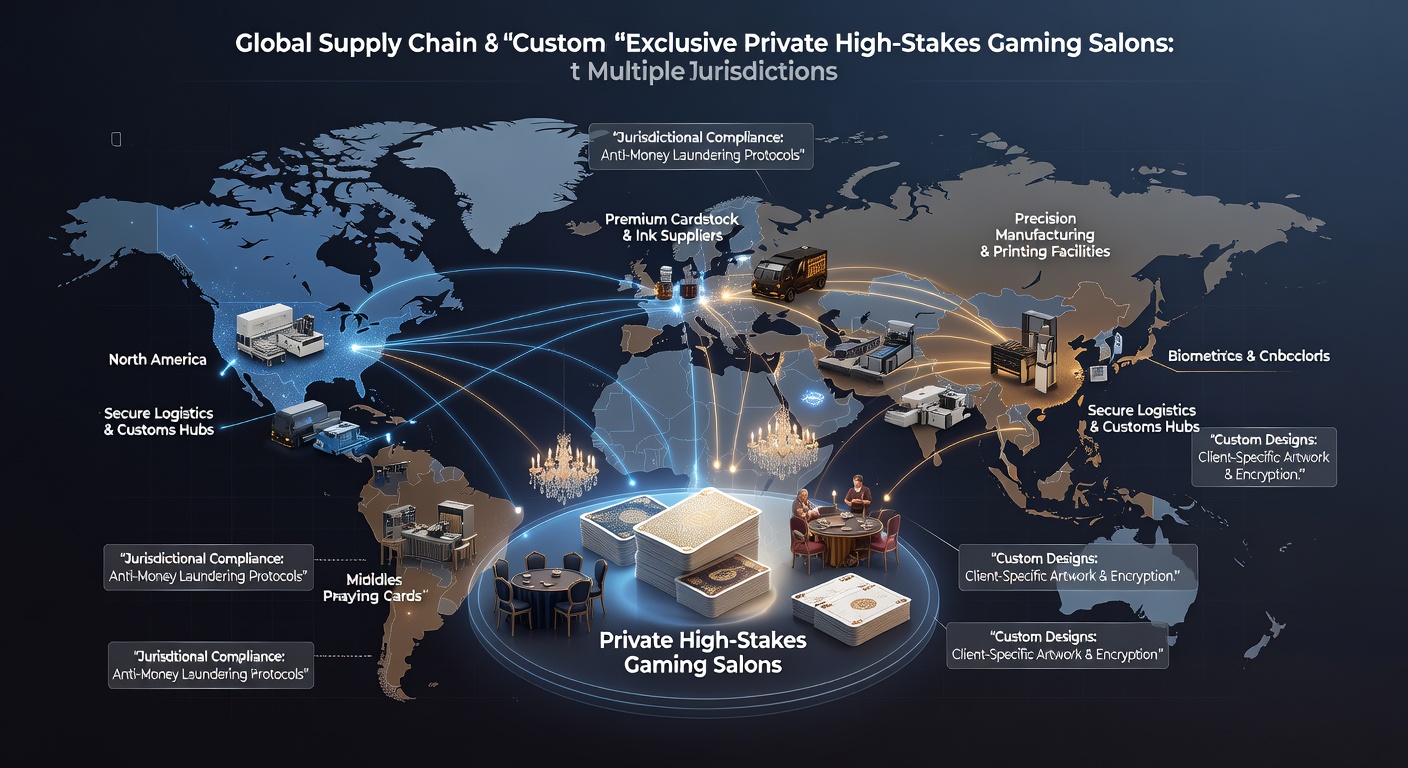
Mapping Supply Chains for Custom Playing Cards in Private High-Stakes Gaming Salons
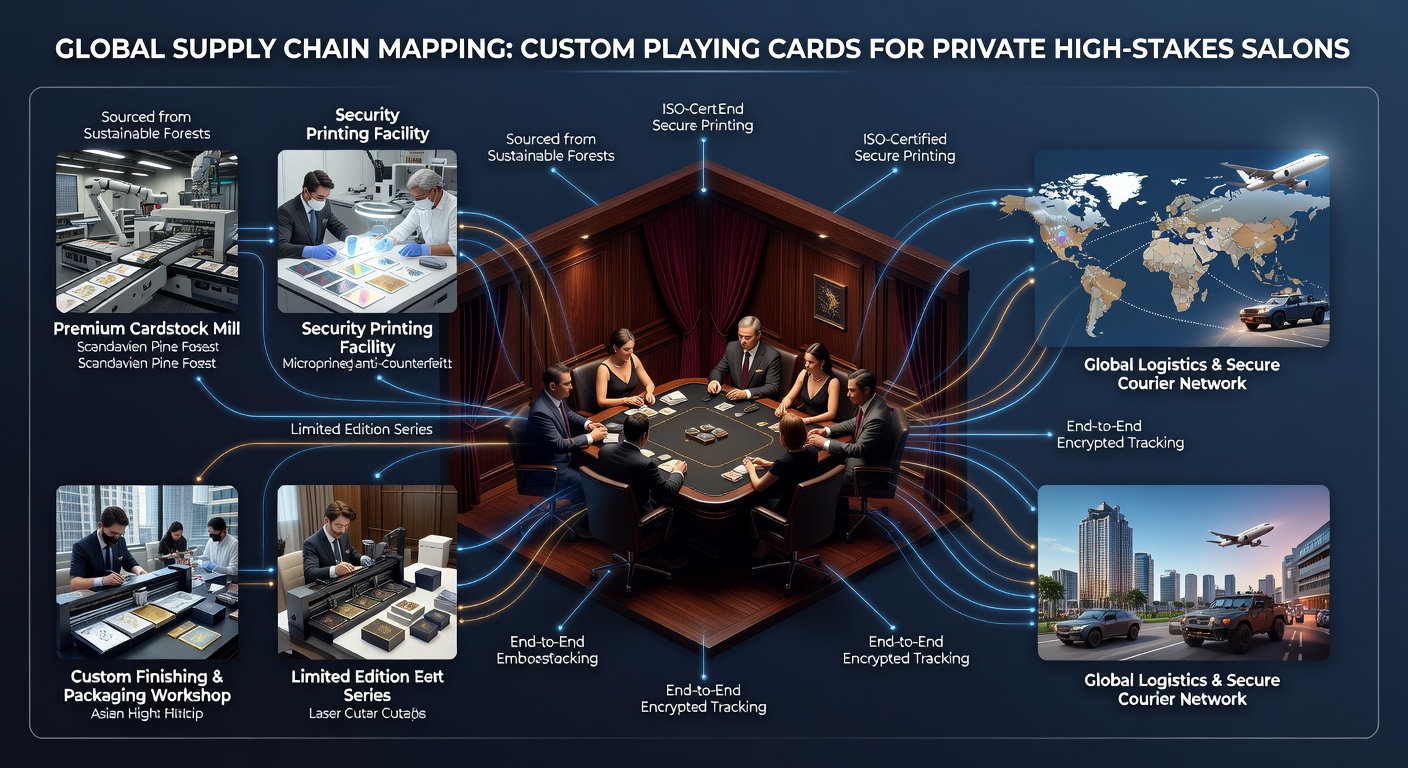
Custom playing cards form a critical yet specialized component within private high-stakes gaming salons that operate across multiple jurisdictions, and their supply chains involve coordinated steps from raw material sourcing through secure manufacturing to final delivery under varying regulatory frameworks. Manufacturers typically begin with premium paper stocks or plastic composites sourced from suppliers in Europe and North America before specialized facilities apply custom designs, security markings, and finishing treatments that deter counterfeiting during high-value play.
Manufacturing Processes and Material Origins
Production facilities concentrate in regions with established expertise in secure printing, including facilities in the United States, China, and parts of Eastern Europe where companies integrate microprinting, UV-reactive inks, and serialized batch codes into each deck. These features allow salons to verify authenticity upon receipt, and data from industry reports indicate that over 85 percent of custom decks destined for private venues incorporate at least three distinct anti-counterfeit measures. Observers note that raw cellulose fibers often originate from sustainably managed forests in Canada while chemical coatings arrive from German suppliers, creating multi-continental input chains that require precise coordination to maintain quality consistency.
Once printed, decks undergo automated inspection systems that scan for defects before packaging in tamper-evident containers, and this stage frequently occurs at the same site as initial production to reduce handling points. Research from gaming equipment standards organizations shows that lead times for fully customized decks average between four and eight weeks depending on design complexity and order volume.
Logistics, Distribution Networks, and Jurisdictional Routing
After manufacturing, decks travel through specialized logistics providers that handle high-value, low-volume shipments under bonded transport arrangements to minimize duties and maintain chain-of-custody documentation. Private salons in jurisdictions such as Nevada, Macau, and select Australian states receive these shipments via air freight followed by secure ground transfer, with routing decisions influenced by bilateral trade agreements and gaming-specific import classifications. In May 2026 several regulatory bodies introduced updated manifest requirements that now mandate digital tracking identifiers for all gaming equipment entering licensed premises, prompting logistics firms to adopt blockchain-based verification platforms.
Cross-border movements must comply with each destination's licensing rules, and companies frequently maintain regional warehouses in free-trade zones such as Singapore and Dubai to expedite redistribution while avoiding repeated customs inspections. Those who study these networks report that average transit durations range from five to twelve days for intercontinental routes when expedited clearances are secured in advance.
Regulatory Compliance Across Multiple Jurisdictions
Each jurisdiction imposes distinct rules governing the importation, storage, adn use of gaming equipment, and operators must map these requirements during supply chain planning to avoid delays or seizures. Nevada's gaming authorities require pre-approval of all playing card designs and serial tracking, whereas Canadian provincial regulators focus on supplier background checks and ongoing audit access. Australian state frameworks emphasize environmental certifications for packaging materials, and European venues often demand compliance with data protection standards when serialized decks interface with digital inventory systems.
Salon operators coordinate with legal specialists to maintain jurisdiction-specific compliance matrices that update whenever rules change, and recent amendments in several Asian markets now require physical sample submissions before bulk shipments receive clearance. According to a study published by the University of Macau's gaming research center, coordinated mapping reduces customs hold times by an average of 40 percent compared with ad-hoc routing approaches.
Challenges in Supply Chain Visibility and Risk Mitigation
Mapping these chains presents ongoing challenges because private salons often operate under confidentiality agreements that limit public disclosure of supplier details, and multiple subcontractors may participate in any single deck's journey. Disruptions such as port congestion or raw material shortages can cascade quickly, prompting operators to develop dual-sourcing strategies that maintain at least two approved manufacturers per card specification. Industry associations have begun publishing voluntary guidelines that encourage standardized data exchange formats between manufacturers, shippers, and end users to improve overall traceability without compromising competitive information.
Security remains paramount throughout the chain, and firms deploy GPS-enabled containers along with tamper sensors that transmit real-time alerts if seals are breached. Data collected from these systems helps identify recurring risk points, allowing proactive adjustments such as rerouting around high-theft corridors.
Conclusion
Effective mapping of supply chains for custom playing cards requires integration of manufacturing details, logistics pathways, and jurisdiction-specific regulations into unified operational plans that adapt as rules evolve. Organizations that maintain current compliance matrices and diversified supplier relationships consistently achieve smoother deliveries to private high-stakes venues worldwide, and continued adoption of digital tracking tools supports greater transparency across all participating entities.