How Manufacturers Calibrate Precision Dice Using Laser Scanning to Maintain Fairness Standards Across International Gaming Floors
Devon Butler · Aug 11, 2026
How Manufacturers Calibrate Precision Dice Using Laser Scanning to Maintain Fairness Standards Across International Gaming Floors
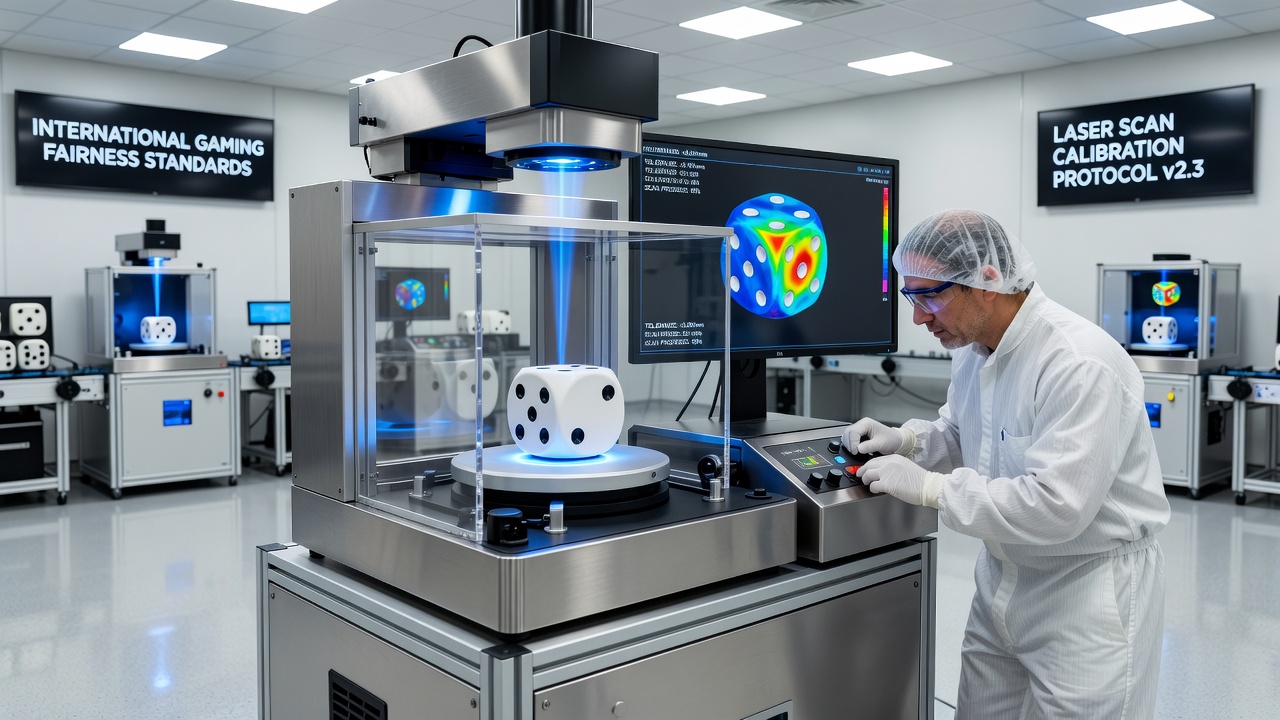
Precision dice form a foundational element in table games across casinos worldwide, where even minor deviations in weight distribution or edge geometry can alter outcomes over thousands of rolls. Manufacturers address these requirements through laser scanning systems that measure physical dimensions at the micron level, and this technology integrates into production lines that supply gaming floors from Las Vegas to Macau and European resorts.
The Role of Laser Scanning in Dice Production
Laser scanners project structured light patterns across each die face and edge while high-resolution cameras capture the reflected data points, creating a three-dimensional model that reveals surface flatness, corner sharpness, and internal material consistency. Technicians compare these models against tolerance thresholds established by regulatory bodies, and any unit falling outside specified parameters undergoes rejection or rework before packaging.
Systems operate at speeds that accommodate high-volume output, scanning multiple dice per minute without contact that could introduce surface marks. Data logs from each scan feed into quality management software, allowing traceability from raw material batch to final shipment, which auditors review during facility inspections.
Regulatory Standards Across Regions
Standards vary by jurisdiction yet share core requirements for symmetry and weight balance. In the United States, the Nevada Gaming Control Board specifies dimensional tolerances and material composition for dice used in licensed establishments, while similar guidelines appear in New Jersey Division of Gaming Enforcement protocols. European operators align with testing criteria from bodies such as the Malta Gaming Authority, and Australian venues follow specifications outlined by state regulators in New South Wales and Victoria.
Manufacturers serving multiple markets maintain parallel certification processes, running the same physical dice through different scanning protocols to satisfy each set of rules. Data compiled in August 2026 showed continued alignment efforts between North American and Asia-Pacific facilities as cross-border supply chains expanded.
Step-by-Step Calibration Process
Production begins with polymer or cellulose acetate blanks formed under controlled temperature and pressure conditions, after which initial milling creates the six faces and pips. Laser scanning occurs at two stages: immediately after milling to catch gross defects, and again after polishing and numbering to verify final geometry.
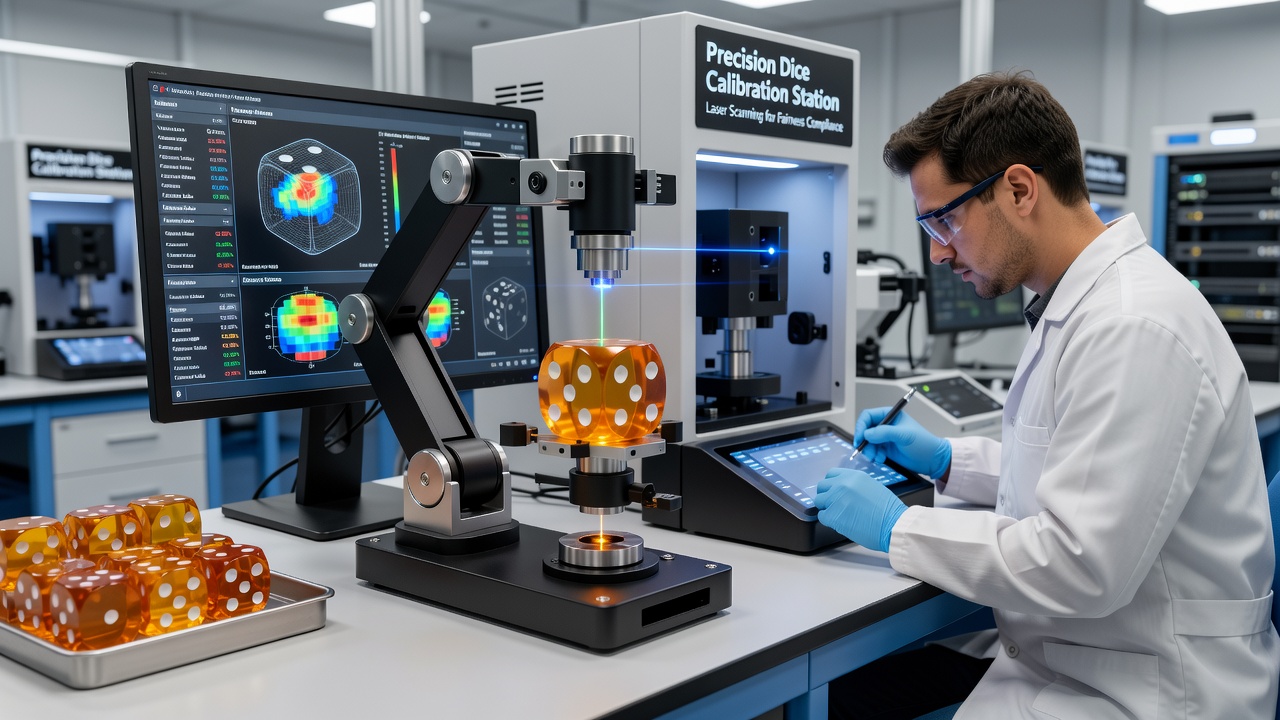
Operators load dice into automated fixtures that rotate each piece through multiple angles under the scanner head. Software algorithms calculate center of gravity offsets and edge radius measurements, flagging any deviation exceeding 0.02 millimeters in most commercial standards. Rejected dice return for material recycling rather than entering the supply stream.
Integration with International Gaming Operations
Once certified, dice ship to distribution centers that serve integrated resorts and standalone properties. Floor supervisors in high-volume venues rotate dice sets according to schedules set by internal compliance teams, and used dice undergo random retesting with portable scanning units to confirm ongoing integrity. Records from these spot checks contribute to broader industry datasets tracked by organizations such as the Gaming Laboratories International.
Supply chain documentation includes certificates of calibration that reference the specific laser scanner model and software version employed during manufacturing. Casino procurement departments cross-reference these documents against their own regulatory filings, ensuring continuity from factory floor to gaming table.
Technological Advancements and Data Utilization
Recent scanner models incorporate multi-wavelength lasers that penetrate translucent materials to detect subsurface voids or density variations invisible to surface inspection alone. Machine learning layers applied to historical scan archives help predict tool wear patterns on milling equipment, prompting preemptive maintenance that reduces defect rates over time.
Facilities in Southeast Asia and North America share anonymized calibration datasets through industry consortia, enabling comparative analysis of production consistency across different environmental conditions. These exchanges support refinements in material formulations without compromising the independent verification steps required by each jurisdiction.
Conclusion
Laser scanning has become a standard component in precision dice manufacturing because it delivers repeatable, non-destructive measurements that align with the varied regulatory frameworks governing international gaming. Facilities maintain detailed records that trace each die from raw material through final inspection, supporting the operational needs of casinos that rely on consistent equipment performance across global properties. Continued integration of scanning data with production controls and compliance reporting sustains the technical foundation for fairness verification in dice-based games.