High Roller Hooks: Decoding Casino Loyalty Tiers and Comp Calculations
Drew Butler · Apr 26, 2026
High Roller Hooks: Decoding Casino Loyalty Tiers and Comp Calculations
The Pull of High Rollers in Modern Casinos
Casinos worldwide target high rollers, those players who wager substantial amounts, because they generate the bulk of gaming revenue; data from the Nevada Gaming Control Board reveals that VIP segments often account for over 40% of a property's gross gaming revenue, even while comprising just a fraction of total visitors. These players receive tailored incentives through loyalty programs, systems designed to track play and dispense rewards proportionally, and what's interesting is how tiers structure access to those perks, creating a ladder that climbs from basic membership to elite status.
Programs like MGM Rewards or Caesars Rewards exemplify this setup, where base levels offer modest benefits, but ascension unlocks escalating privileges; observers note that high rollers chase these tiers not just for the comps, but because they signal status within the casino ecosystem. And yet, beneath the glamour, calculations drive every reward, formulas rooted in player data that predict value and risk.
Breaking Down Loyalty Tiers: From Bronze to Black Diamond
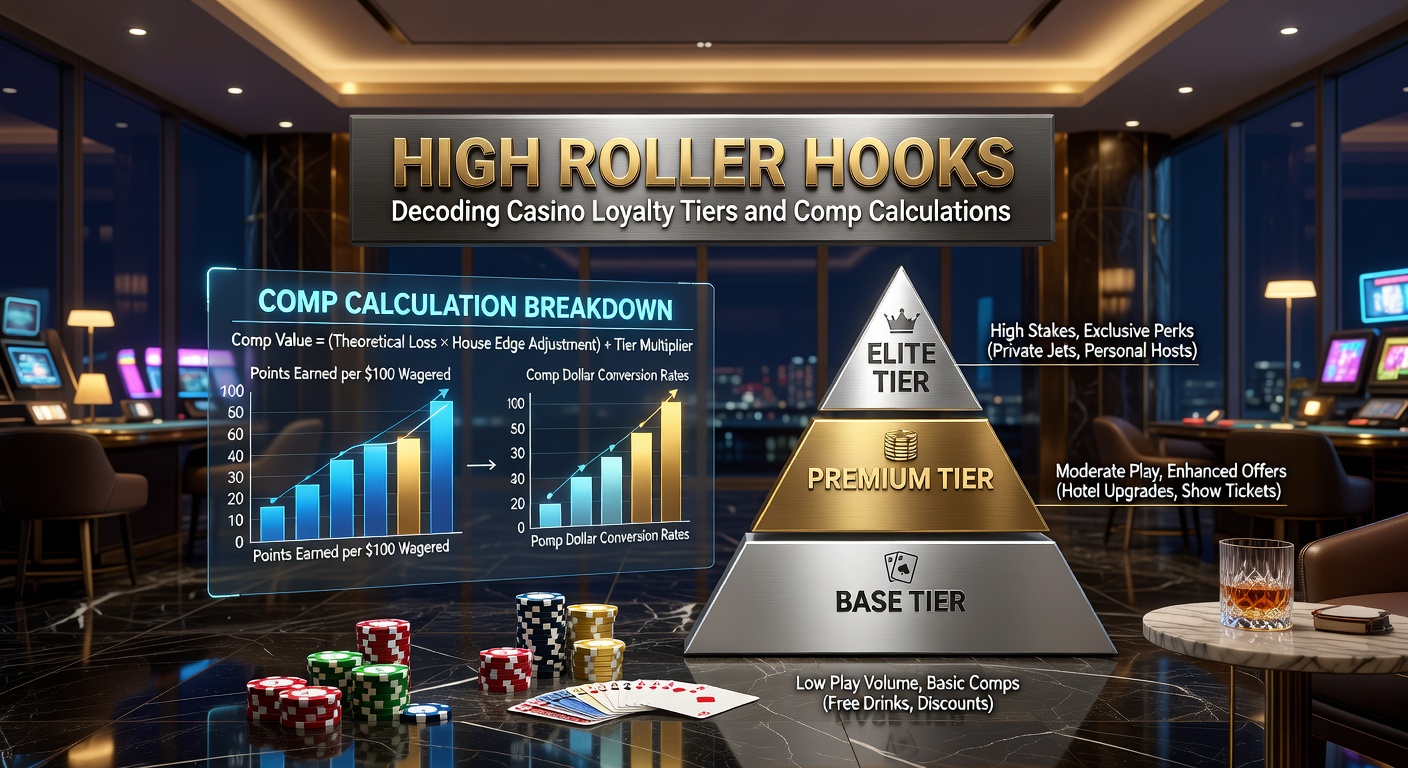
Tiers typically start simple—think Bronze, Silver, Gold—then escalate to Platinum, Diamond, and beyond, with requirements tied to earned points or theoretical loss; for instance, one common structure demands 25,000 points for Gold status, doubling to 50,000 for Platinum, while elite tiers like Chairman or Seven Stars at Caesars require millions in tracked play. Points accrue based on coin-in for slots or rated action for tables, where a $100 average bet on blackjack at 80 hands per hour racks up points faster than sporadic low-stakes spins.
But here's the thing: tiers reset annually in many programs, pressuring players to maintain volume; data indicates that 60% of mid-tier members drop down without sustained play, according to industry analyses. Higher tiers grant priority access—reserved rooms, personal hosts, private jets in extreme cases—and those who've climbed the ladder often find invitations to exclusive events, like invite-only slot tournaments or chef's table dinners, perks that blend luxury with loyalty.
- Bronze/Sapphire: Basic free play, email offers.
- Silver/Ruby: Discounts on rooms, priority lines.
- Gold/Emerald: Complimentary valet, show tickets.
- Platinum/Diamond: Suite upgrades, airfare reimbursement.
- Invited/Seven Stars: Unlimited comps, global recognition.
Take a player logging $500,000 in rated table play over a month; that action catapults them to Platinum, unlocking comps worth 10-20% of theoretical loss, a metric casinos guard closely. It's noteworthy how programs vary branding—Wynn's Red Card mirrors this progression—yet the core remains points-driven ladders that reward consistency over luck.
Inside Comp Calculations: Theo, Hold, and the House Edge
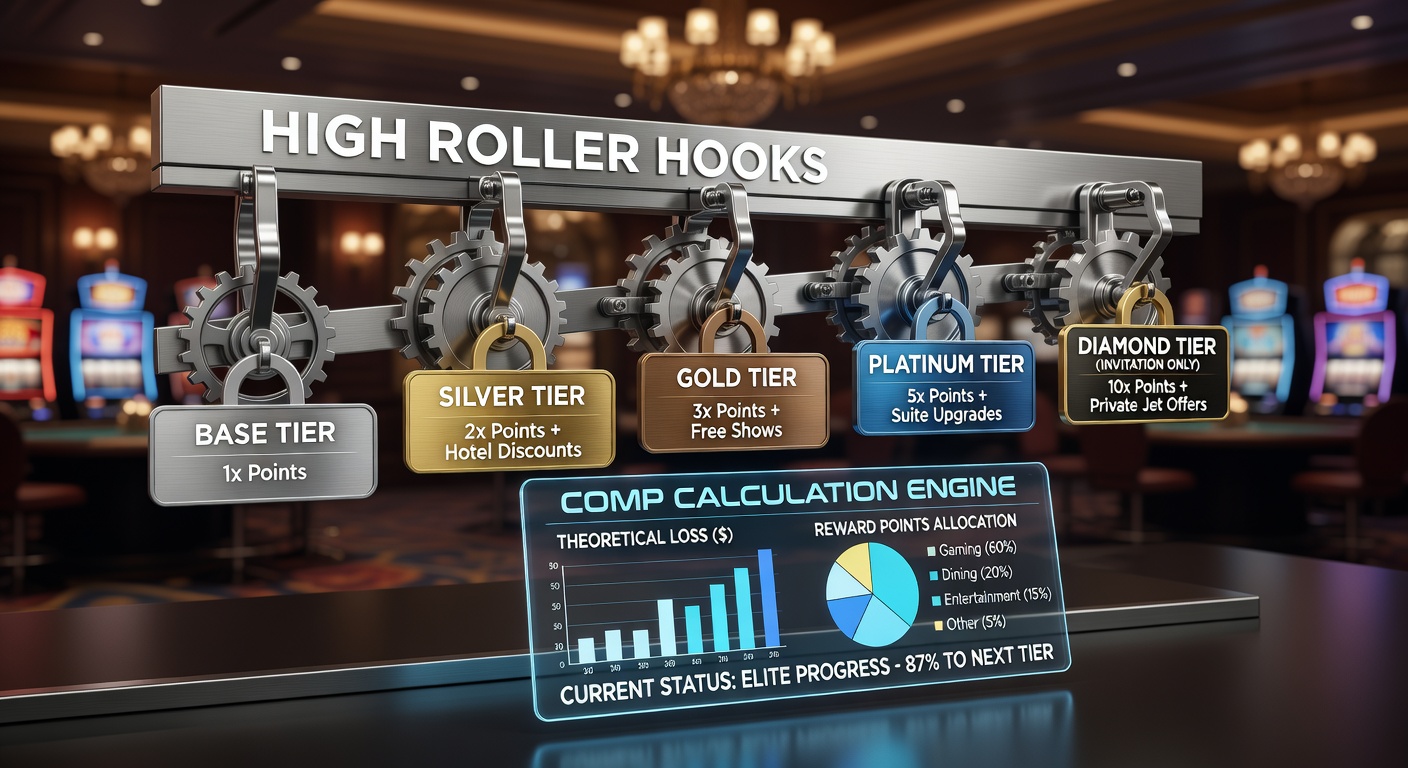
Comps hinge on "theo," short for theoretical loss, a figure casinos compute as house edge multiplied by average bet size, hours played, and hands or spins per hour; for blackjack with a 0.5% edge, a $10,000 average bet over 4 hours at 60 hands per hour yields a theo of $1,200, making that player eligible for rewards around 10% of theo, or $120 in value. Turns out, hosts rate play conservatively—lowballing bets or hours if variance swings positive—ensuring the house stays ahead, while data from UNLV International Gaming Institute studies shows average comp rates hover at 0.1% to 0.25% of total handle for high rollers.
Slots operate differently, with points per dollar wagered (often 1 point per $4-$10 coin-in), redeemable at 1 cent per point; a $1 million slot session at 0.1 points per dollar nets 100,000 points, worth $1,000 in free play, but actual loss determines tier boosts. And for tables, actual hold percentage—the house win divided by handle—fine-tunes future offers; if a whale drops $200,000 on baccarat with 1.06% edge, yet wins big, comps adjust downward, reflecting risk rather than outcome.
Researchers have dissected these formulas: Theo = (Avg Bet × House Edge × Speed × Time), where speed means decisions per hour; pit bosses log this live via apps, aggregating data for host decisions. What's significant is layering—comps stack across rooms (40% of theo), food/beverage (25%), air (20%), and cashback (15%)—creating personalized packages. One case saw a high roller receive a $50,000 suite comp after a $2 million theo weekend, illustrating how scale amplifies returns.
Online casinos mirror this, using RNG-tracked wagers for points; platforms like BetMGM award tier credits at 5 per $100 wagered, climbing with status, although brick-and-mortar edges out in luxury redemptions.
Regional Twists: Vegas, Macau, and Beyond
In Las Vegas, tiers emphasize experiential comps—Cirque du Soleil shows, Michelin meals—fueled by Strip competition; Nevada data shows high roller play surged 15% in early 2026, propping up revenues amid broader shifts. Contrast that with Macau, where junket operators broker VIP rooms with rolling chips, comps calculated on 1.25% commission over turnover, drawing Asian whales who bet millions daily; observers track how post-COVID reforms tightened these, yet VIP revenue hit $10 billion quarterly by April 2026.
Australia's Crown Rewards or The Star Club lean on points-per-credit, with top tiers offering waterfront villas; reports from the Australian Gambling Research Centre highlight how federal oversight caps comp excesses, prioritizing responsible gaming metrics. Europe, via operators like Partouche in France, tiers on euro wagers, blending cashback with tournament entries, while Canadian sites under Ontario iGaming allocate 0.2% rakeback for elites.
So cross-border players exploit variances—Vegas for suites, Macau for volume rebates—but regulatory filings reveal harmonization trends, like enhanced tracking post-2025 AML updates.
April 2026 Snapshot: Evolving High Roller Dynamics
April 2026 brought fresh insights into loyalty mechanics, as U.S. commercial gaming reports logged VIP-driven growth despite sports betting dips; figures indicate high roller theo calculations refined with AI, predicting play patterns more accurately, per industry panels. Casinos rolled out hybrid tiers blending online-offline action, awarding bonus points for cross-platform wagers; one Las Vegas property announced a "Global Whale" tier requiring $5 million annual theo across venues, complete with yacht charters.
Yet pitfalls persist—overleveraged play chasing comps, as studies document 20% of high-tier members facing debt spikes; programs now integrate spend limits, responding to calls for sustainability. It's interesting how blockchain pilots in select casinos tokenize comps, letting high rollers trade points peer-to-peer, a nod to crypto integration without upending core calcs.
Conclusion
Loyalty tiers and comp calculations form the backbone of high roller retention, transforming raw wagers into calibrated rewards that keep whales returning; from theo formulas dictating suite keys to point ladders unlocking exclusivity, these systems blend math with motivation. Data underscores their potency—elite tiers boast 80% retention rates—while regional flavors add nuance, ensuring casinos worldwide hook their biggest fish. Those decoding the tiers find clarity in the numbers, where every bet writes the next perk into play.