Demographic Trends Shaping Participation in International Poker Circuits
Devon Butler · Aug 23, 2026

Demographic Trends Shaping Participation in International Poker Circuits
International poker circuits have seen measurable shifts in player demographics over recent years with data pointing to changes in age distribution, geographic origins and gender balance across major events. Observers note that participation patterns reflect broader economic and technological developments while tournament organizers track these trends through registration statistics and player surveys conducted at venues worldwide.
Age Distribution and Generational Shifts
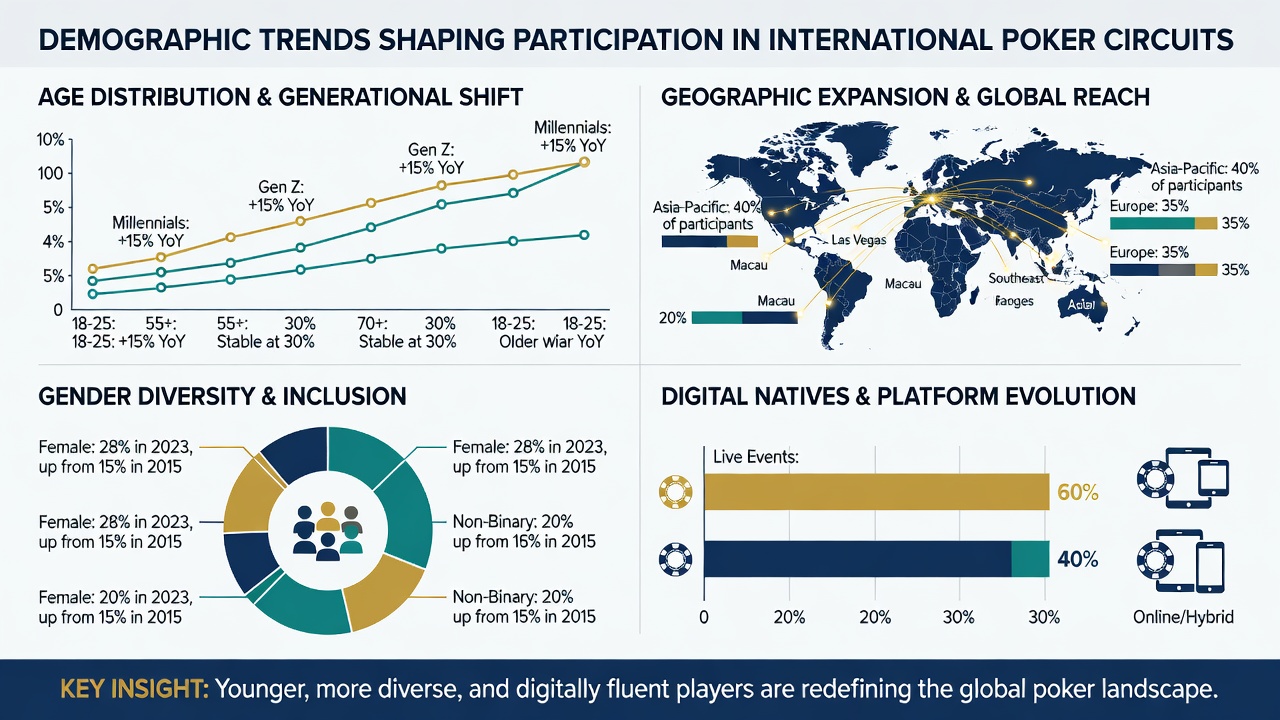
Younger participants now constitute a larger share of entrants at circuits such as the World Series of Poker and European Poker Tour events, with registration figures showing increased numbers in the 21 to 35 age bracket since 2023. This development coincides with expanded online qualification pathways that allow players from various regions to enter without extensive travel costs. Meanwhile older cohorts maintain steady presence in high-stakes side events where experience accumulates over decades of circuit play.
Research from academic institutions indicates that digital platforms introduced during the 2010s lowered entry barriers for those born after 1990, and this cohort continues to drive volume at mid-tier tournaments. Data collected through August 2026 registration portals reveals consistent growth in this segment across North American and Asian stops, although average buy-in amounts for these players remain lower than those recorded among veterans.
Geographic Expansion and Regional Participation
Asian markets contribute rising percentages of total entrants with notable increases from South Korea, India and Southeast Asian nations at stops in Macau and Manila. Figures compiled by regional gaming associations show that players originating from these areas now represent over 25 percent of fields at select international series, a marked change from patterns observed five years earlier. European circuits meanwhile sustain participation from traditional bases in the United Kingdom, Germany and France while drawing new entrants from Eastern European countries.
North American events continue to attract strong domestic numbers supplemented by cross-border travel from Canada and Mexico. Reports issued by the Canadian Gaming Association document steady outflows of players to U.S. venues during summer schedules, a pattern reinforced by favorable exchange rates and integrated resort offerings that combine poker with other entertainment options.
Gender Balance and Inclusion Metrics
Female participation rates have climbed gradually across tracked circuits according to aggregated tournament data, rising from approximately 8 percent in 2020 to near 12 percent in 2026 fields. Dedicated women-only events and mixed-gender satellites organized by circuit operators account for part of this movement, while broader marketing campaigns target recruitment through sponsorships and media coverage. Industry organizations such as the American Gaming Association compile annual participation statistics that confirm these incremental gains without projecting future trajectories.
Studies conducted by university research teams in Australia and the United States examine barriers that persist for female players, including travel logistics and prize pool structures. These analyses draw on survey responses collected at events in Sydney and Las Vegas, revealing that scheduling flexibility and childcare considerations influence attendance decisions for this demographic segment.
Economic Factors and Socioeconomic Profiles
Income levels and occupational backgrounds among circuit participants vary widely with middle-income professionals forming a core group alongside full-time players who derive primary earnings from tournament results. Economic indicators from host jurisdictions show that currency fluctuations and visa policies affect travel patterns, particularly for players based in emerging markets. August 2026 data from multiple series indicates sustained interest despite inflationary pressures on travel and accommodation expenses.
Observers track how remote work arrangements adopted after 2020 enable more frequent circuit attendance for certain professions, a factor cited in player interviews conducted at European stops. This flexibility appears most pronounced among technology sector employees who combine tournament travel with remote obligations.
Conclusion
Demographic data collected through 2026 demonstrates ongoing evolution in international poker participation driven by technological access, regional economic conditions and targeted organizational initiatives. Continued monitoring by gaming associations and academic researchers will clarify whether current patterns stabilize or accelerate in subsequent seasons, with registration systems providing the primary source for such measurements across global venues.